Business Directories Help AI Recommend Sites?

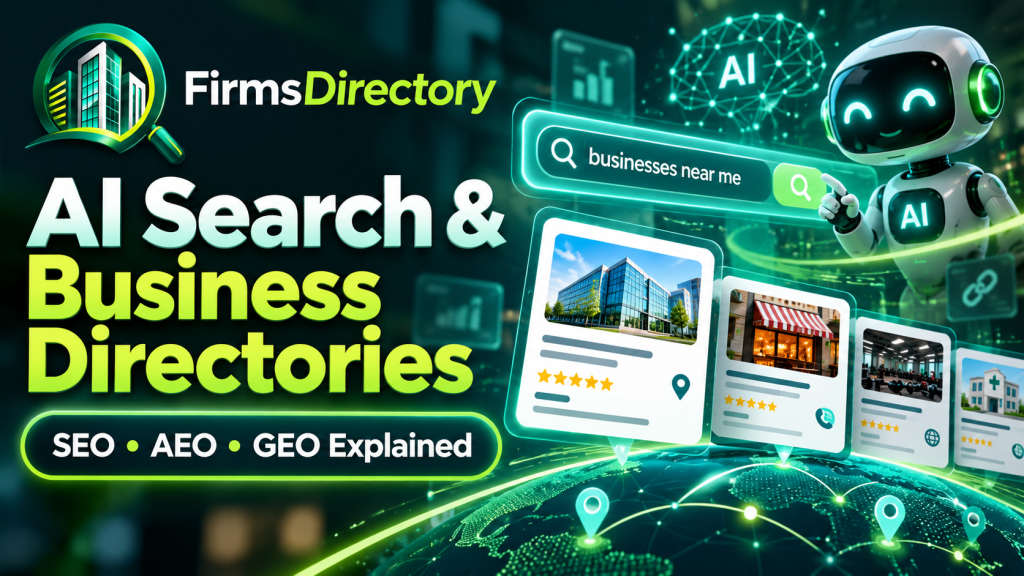
Can business directories help artificial intelligence discover and recommend company websites? Yes, business directories can potentially contribute to AI-powered business discovery. However, being listed in a directory does not guarantee that ChatGPT, Google AI Overviews, Microsoft Copilot, or another AI platform will recommend a particular business.
As artificial intelligence becomes increasingly integrated into online search, businesses are exploring new ways to improve their visibility. Traditional search engine optimization remains important, but concepts such as Answer Engine Optimization (AEO), Generative Engine Optimization (GEO), and Entity SEO are becoming part of broader digital marketing discussions.
Business directories may contribute to these strategies by providing publicly accessible information that helps people and search systems identify companies, understand their services, and discover their official websites.
This educational guide explains how business directories relate to AI search, the differences between SEO, AEO, and GEO, and the practical steps businesses can take to improve their online discoverability.
What Is a Business Directory?
A business directory is an online platform that organizes information about companies, products, services, and official business websites.
Traditional business directories helped people discover companies through organized listings. Modern digital business directories expand on this concept by providing searchable profiles, business categories, company descriptions, website links, and other relevant information.
For example, someone searching for accounting software might visit a business directory to identify companies offering bookkeeping systems, invoicing applications, payroll platforms, or financial management tools.
Instead of manually searching for individual companies, visitors can explore businesses organized by their industries and services.
Business directories also create publicly accessible webpages containing information about listed companies. These pages may be discovered by conventional search engines and, depending on their accessibility and relevance, AI-powered search systems.
Why Business Directories Still Matter
The value of a business directory goes beyond simply creating another link to a website.
A useful directory can help customers understand what a company offers, compare businesses within an industry, and identify an official website for additional information.
Directories can also contribute to a company’s wider digital presence by making accurate business information available beyond its own website.
However, a directory’s effectiveness depends on the quality of its listings, content accessibility, relevance, and usefulness to visitors.
How Do AI Search Engines Discover and Recommend Businesses?
Traditional search engines typically provide a ranked collection of webpages in response to a user’s search query.
AI-powered search experiences can respond differently.
Instead of returning only website links, they may generate detailed answers containing explanations, comparisons, company names, and citations.
Consider this question:
“What are the best customer relationship management platforms for small businesses?”
A search-enabled AI assistant may retrieve relevant information from different online sources, including:
- Official company websites
- Business directories
- Product comparison websites
- Independent reviews
- Educational articles
- Industry publications
Depending on the available information, the AI system may generate a response recommending several CRM platforms while explaining their features, intended customers, or limitations.
A business directory listing can potentially contribute useful information to this process.
How a Directory Profile Might Be Used
Imagine a company that provides customer relationship management software.
Its directory profile describes the software’s purpose, important features, target customers, and official website.
If an AI search system retrieves that profile while researching relevant CRM providers, the information might help establish what the business offers.
The system could then recommend the company, cite the directory profile, link directly to the company’s official website, or choose other sources instead.
These outcomes are not guaranteed. AI platforms use different retrieval and recommendation processes, and the relevance of a source depends on the question being answered.
AI Search Retrieval Is Different from AI Training
It is important to distinguish between AI model training and live information retrieval.
Some AI-generated responses use information learned during model training. Search-enabled AI platforms can also retrieve webpages when responding to questions.
A company does not necessarily need to be memorized during AI model training for its publicly available information to appear in a search-enabled answer.
Similarly, publishing a business directory listing does not automatically cause an AI model to learn, remember, or recommend the company.
Business owners should focus on making information accessible, accurate, and useful rather than assuming that directory submissions automatically influence AI training.
What Is SEO (Search Engine Optimization)?
Search Engine Optimization, commonly called SEO, involves improving a website’s content, technical structure, and overall accessibility to increase its chances of appearing in relevant search results.
SEO is commonly associated with search engines such as Google and Bing.
Important SEO practices include creating helpful content, improving page titles, organizing headings, providing descriptive internal links, and ensuring that search engines can crawl important pages.
How Business Directories Support SEO
A business directory creates an additional public profile for a company.
That profile may appear in traditional search results or help people browsing the directory discover the business.
It may also contain a link directing visitors to the company’s official website.
However, not every directory backlink improves SEO rankings.
Search engines evaluate links using various signals, and links created mainly to manipulate rankings may violate search engine spam policies.
Businesses should prioritize relevant directories with meaningful profiles rather than attempting to generate large numbers of low-quality backlinks.
The primary objective should be to provide useful company information and create legitimate opportunities for business discovery.
What Is AEO (Answer Engine Optimization)?
Answer Engine Optimization, or AEO, focuses on making information easier for question-answering systems to understand and use when producing direct answers.
Traditional SEO helps websites become discoverable through search results. AEO emphasizes presenting information that clearly addresses specific questions.
Example of AEO-Friendly Business Information
Consider a company offering invoice automation software.
A vague company description might say:
“We provide innovative business solutions that transform the future of productivity.”
Although this statement sounds promotional, it does not clearly explain the company’s services.
A more informative description might say:
“The company provides invoice automation software that helps businesses capture invoices, organize payment approvals, and integrate financial records with accounting systems.”
The second description provides specific information that answers what the company does.
This type of writing benefits readers and may also help systems that retrieve information to answer relevant questions.
How Business Directories Can Support AEO
Directories can contribute to AEO by encouraging companies to provide accurate descriptions of their products, services, and intended customers.
Clearly organized information helps readers identify whether a company matches their requirements.
For example, a company profile explaining that a platform provides appointment scheduling software for service businesses is more informative than a generic listing containing only the company’s name.
AEO does not require stuffing pages with repetitive questions. Clear information, meaningful headings, and direct explanations are more valuable.
What Is GEO (Generative Engine Optimization)?
Generative Engine Optimization, commonly known as GEO, is an industry term for practices intended to improve the visibility of businesses, brands, or content within AI-generated responses.
GEO has gained attention as people increasingly use generative AI systems to research products, compare services, and discover businesses.
For example, a user might ask:
“Recommend several affordable project management tools for a startup.”
An AI-powered search experience might respond with a comparison of relevant software providers.
From a GEO perspective, businesses may be interested in whether they are mentioned, recommended, or cited in these answers.
These outcomes should be distinguished from one another.
A company mentioned in an AI response is not necessarily being endorsed. Similarly, an AI system citing an article about a company does not automatically mean it recommends that company.
How Business Directories May Contribute to GEO
A business directory may contain useful company information that an AI-powered search system can retrieve when researching a topic.
Detailed company descriptions, relevant service categories, and helpful comparisons can provide context about businesses within an industry.
However, there is no guaranteed method of making an independent AI platform recommend a company simply by creating a directory listing.
Different AI systems may select different sources and produce different recommendations based on the question, available information, and search context.
Google’s official documentation also explains that its AI search features do not require special AI-specific schema or separate technical optimization beyond established search requirements.
For businesses, GEO should therefore complement good SEO and useful content rather than replace them.
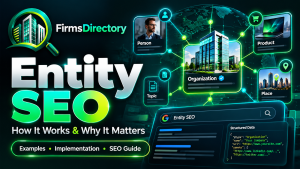
What Is Entity SEO?
Entity SEO focuses on helping search systems recognize and distinguish identifiable subjects such as businesses, organizations, products, and brands.
An entity represents something that can be identified as a distinct subject.
For example, a software company may have an official business name, a website, a brand identity, specific products, and clearly defined services.
These details help distinguish that company from other businesses with similar names or overlapping activities.
How Directories Can Help Establish Business Identity
A directory profile can connect a company’s name with its official website and services.
Maintaining accurate and consistent information across public profiles can reduce confusion about the company’s identity.
For example, if a business primarily develops accounting software, its directory profile should accurately describe it as a software provider rather than incorrectly identifying it as a professional accounting firm.
Clear descriptions help potential customers understand the business and may help search systems interpret relevant information.
What About Schema Markup?
Structured data provides standardized information about the content of a webpage.
Schema.org includes vocabulary such as Organization, Article, and BreadcrumbList for describing different kinds of information.
Appropriate structured data can help search engines interpret a page’s content and relationships.
However, structured data should accurately represent information visible on the webpage.
Adding schema markup does not guarantee higher rankings, AI citations, or business recommendations.
SEO vs. AEO vs. GEO vs. Entity SEO: Key Differences
Although these approaches emphasize different objectives, they overlap in practice.
| Strategy | Main Objective | Directory Contribution |
|---|---|---|
| SEO | Improve traditional search visibility. | Searchable profiles, relevant links, and business discovery. |
| AEO | Provide clear answers to user questions. | Accurate descriptions and helpful business information. |
| GEO | Support visibility in AI-generated responses. | Relevant profiles, useful comparisons, and information that AI systems may retrieve. |
| Entity SEO | Help identify and distinguish organizations. | Consistent company identity, service descriptions, and official website information. |
The most useful approach is to consider these strategies together.
A clear company description can help a visitor understand the business, provide relevant information for traditional search, answer common questions, and potentially contribute information to AI-powered search responses.
How Can Business Directories Support AI Search Visibility?
Business directories can contribute to online discoverability through several practical features.
1. Detailed Company Descriptions
A complete business profile can explain the company’s products, services, intended customers, and business activities.
Specific descriptions help people understand what the company offers and make the listing more informative.
2. Relevant Industry Categories
Categories organize companies according to their services and business activities.
Accurate categorization helps visitors explore related companies and provides useful context about a business.
3. Official Website Links
A directory profile linking to a company’s official website helps visitors locate the primary source of information about its products and services.
This supports business discovery and provides a direct path for customers who want additional details.
4. Accurate Business Information
Businesses should regularly review their listings to ensure that company names, descriptions, and official website links remain accurate.
Outdated or misleading information can reduce the usefulness of a listing.
5. Genuine Reviews and Feedback
Authentic customer reviews can provide additional context about customer experiences.
However, review ratings should be clearly distinguished from popularity scores, votes, and other engagement metrics.
Different measurements represent different information, and they should not be presented as interchangeable indicators of customer satisfaction.
6. Accessible and Organized Content
Public directory pages should be easy for visitors to navigate and accessible to appropriate search crawlers.
Relevant headings, descriptive links, organized content, and clear page structures can improve usability and help search systems understand the information.
7. Useful Educational Content
Business directories can also publish educational guides and industry comparisons.
For example, a detailed guide explaining how customer relationship management software works may answer questions that a simple company listing cannot.
Useful educational content gives visitors additional reasons to explore a directory beyond finding company names.
How Businesses Can Improve Their Visibility in Traditional and AI Search
Businesses do not need to abandon traditional SEO to prepare for AI-powered search.
Instead, they should focus on improving the quality, clarity, and accessibility of their online information.
Step 1: Maintain an Informative Official Website
A company’s website should clearly explain its products, services, intended customers, and how visitors can contact the business.
Important information should be presented in readable text with descriptive headings.
Step 2: Create Accurate Business Directory Profiles
Choose directories relevant to your business and complete each listing with factual company information.
Avoid copying vague promotional descriptions into numerous unrelated directories.
Instead, explain what your company does and what customers can reasonably expect from its services.
Step 3: Keep Business Information Consistent
Make sure the company’s public profiles identify the same organization and direct users to its official website.
Update descriptions when products, services, or branding change.
Step 4: Answer Important Customer Questions
Think about the questions potential customers ask before choosing a provider.
These may involve product capabilities, intended users, service limitations, compatibility, or pricing structures.
Providing helpful answers makes business information more valuable.
Step 5: Follow Technical SEO Best Practices
Ensure important website pages can be crawled and indexed when appropriate.
Use descriptive titles, clear navigation, relevant internal links, and structured data that accurately represents the page.
Step 6: Publish Trustworthy Information
Support important claims with reliable evidence where appropriate.
For example, software companies can provide accurate product documentation, while service providers can explain their actual experience and areas of specialization.
Step 7: Monitor Search and Business Results
Review website traffic, customer inquiries, search performance, and relevant AI search citations when available.
Prioritize outcomes that contribute to business growth rather than treating every AI mention as a success.
How Can Businesses Measure AI Search Visibility?
AI search visibility can be more difficult to measure than conventional search engine rankings.
AI-generated responses may change depending on the wording of the question, available sources, and the system generating the answer.
However, several measurement methods can help businesses evaluate their discoverability.
Google Search Console
Google Search Console provides information about website performance in Google Search.
Website owners can examine impressions, clicks, indexed pages, and available reporting related to Google’s evolving AI search experiences.
However, not every AI recommendation or brand mention can be measured independently through Search Console.
Bing Webmaster Tools
Microsoft introduced AI Performance reporting in Bing Webmaster Tools to help website owners understand citations and visibility across supported AI-powered experiences.
This reporting can help identify cited pages and related topics, although it does not measure every AI assistant on the internet.
Website Analytics
Website analytics may help identify referral traffic from search engines, directories, and AI platforms.
Businesses should also monitor whether that traffic produces meaningful results such as inquiries, registrations, or purchases.
Customer Feedback
When appropriate, businesses can ask customers how they discovered the company.
A customer may have found a company through a conventional search result, a directory listing, or an AI-generated recommendation.
These insights can help businesses understand which discovery channels contribute to actual customer acquisition.
Common Mistakes Businesses Should Avoid
Assuming Every Directory Backlink Improves SEO
Not all directory links provide the same value.
Links from irrelevant or low-quality websites should not be treated as guaranteed ranking improvements.
Publishing Generic Company Descriptions
Descriptions containing only promotional phrases provide limited information.
Explain what the company offers, whom it serves, and which problems its products or services address.
Believing GEO Guarantees AI Recommendations
No company or directory can guarantee inclusion in independent AI-generated recommendations.
AI systems choose information based on their own processes, available sources, and the relevance of the user’s question.
Ignoring Traditional SEO
AI optimization should not replace basic SEO practices.
Google states that established SEO fundamentals remain important for its AI-powered search experiences.
Confusing AI Citations with Business Recommendations
An AI citation identifies a source used to support information.
A business recommendation is a separate outcome in which the system presents a company as a potentially suitable option.
These two forms of visibility should not be treated as identical.
How FirmsDirectory Supports Online Business Discovery
FirmsDirectory is an online business directory that helps companies establish public business profiles and make their information accessible to people researching businesses and services.
Businesses can present information about their activities, select relevant categories, and connect interested visitors with their official websites.
These profiles can complement a company’s existing website and broader digital presence.
From an SEO, AEO, and GEO perspective, maintaining an accurate public company profile is one practical part of a wider online discoverability strategy.
However, a directory listing should not be considered a replacement for a useful official website, trustworthy content, or genuine business credibility.
Companies interested in expanding their public business presence can explore the FirmsDirectory business directory or visit the List Your Company page to learn about creating a business listing.
Frequently Asked Questions About Business Directories and AI Search
Do AI search engines use business directories?
AI-powered search systems can retrieve publicly accessible information from business directories alongside official websites, reviews, and other sources. Whether a particular directory is used depends on the AI system, the question being asked, and the relevance of the directory’s content.
Can a business directory listing help ChatGPT recommend my website?
A relevant and accessible directory listing may help ChatGPT Search discover or understand a business. However, the listing does not guarantee a recommendation, mention, or citation. The quality of the company’s official website and other reliable information also matters.
What is the difference between SEO, AEO, and GEO?
SEO focuses on traditional search visibility. AEO emphasizes providing clear answers to questions. GEO focuses on visibility within AI-generated responses. These approaches overlap, and accurate, informative business content can support all three.
Do business directory backlinks improve Google rankings?
Business directory links may provide referral traffic and discovery value, but not every backlink improves search rankings. Links created primarily to manipulate rankings can violate search engine spam policies. Relevance, usefulness, and quality matter more than the number of directory links.
Does AI search require special schema markup?
No special AI-specific schema is required for inclusion in Google’s AI Overviews or AI Mode. Appropriate structured data can help describe webpage content, but it should accurately represent information visible on the page. Structured data does not guarantee rankings or AI recommendations.
Does a verified business directory profile guarantee AI visibility?
No. Verification within a directory may indicate that a company has completed that platform’s verification process. It does not guarantee inclusion or recommendations in independent AI search systems.
Can a company appear in AI recommendations without an official website?
It is possible for an AI system to mention a company using information from third-party public sources. However, an official website gives customers a direct source of information and allows businesses to maintain their own online presence.
How can I check whether AI systems cite my website?
Businesses can review available webmaster tools, AI citation reports, website referral analytics, and relevant search results. Microsoft provides AI Performance reporting for supported AI experiences, but no single tool measures every AI-generated recommendation across all platforms.
Conclusion: Business Directories Can Support AI Discovery, but Quality Matters
Business directories continue to play a role in online business discovery as search technology evolves.
While traditional SEO remains important, AI-powered search introduces additional ways for users to find information, research companies, and evaluate products or services.
Accurate business listings can help make company information publicly accessible and easier for potential customers to discover.
SEO, AEO, GEO, and Entity SEO describe related approaches to improving visibility, clarity, and business recognition across search experiences.
However, no individual business directory listing can guarantee that an AI platform will recommend a company.
The most sustainable strategy is to publish accurate, useful, accessible, and trustworthy business information across relevant online platforms.
For businesses looking to strengthen their public online presence, FirmsDirectory offers a platform for company discovery and business listings.